Legal action against Amazon: Withdrawal refused for non-perishable food
Amazon is making it difficult to return non-perishable food – despite the statutory right of withdrawal. The Centre for European Consumer Protection e.V. (ZEV) has therefore filed an action for an injunction to protect consumer rights.
Background
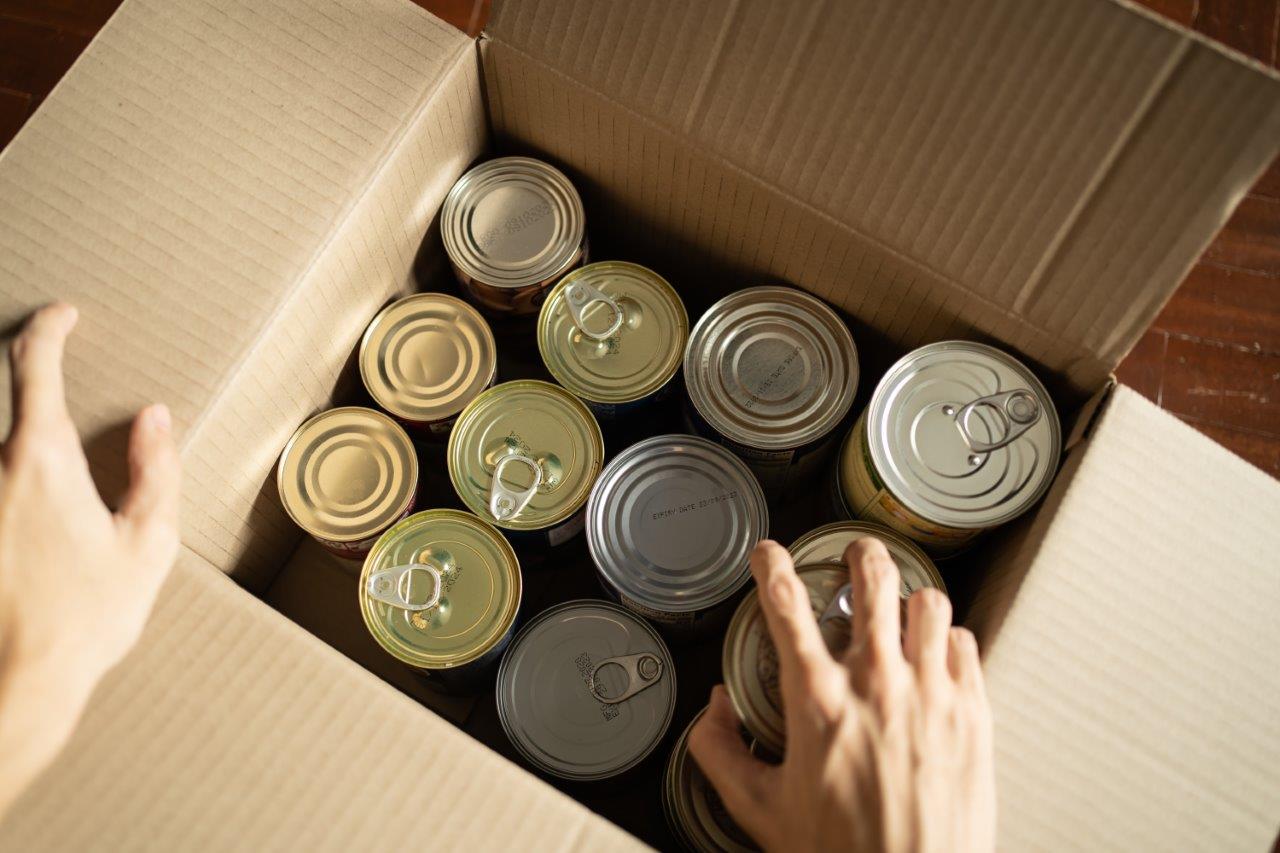
A German consumer ordered non-perishable food items via Amazon, several tins of lentil and bean stew, coffee, and coconut milk to be precise.
A few days later, when she tried to exercise her 14-day right of withdrawal, she was informed in her customer account that the items could not be returned (“This item cannot be returned”)
When she contacted customer services, she was also informed that withdrawal was not possible.
Following individual legal proceedings, she was refunded the purchase price.
At the same time, she contacted ZEV with a request to take action against this practice in principle.
What did we find?
Our investigation quickly revealed that non-perishable tinned goods are not covered by the statutory exceptions to the right of withdrawal under Section 312g of the German Civil Code (BGB). In principle, returns must be possible, particularly if the goods are intact and have a long use-by date.
However, the consumer was unable to initiate a return via her Amazon customer account, and the customer service team also refused to accept the return.
ZEV’s own test purchases and investigations revealed that the standardised withdrawal process in Amazon’s online returns centre did not work in certain cases involving non-perishable foods.
In ZEV’s view, this indicates a systematic breach in online retail that could affect many consumers.
Our response and Amazon’s statement
ZEV sent Amazon a warning letter and requested that the company sign a cease-and-desist declaration.
In its defence, Amazon referred to its General Terms and Conditions (GTC), which state that the right of withdrawal is only excluded in the case of perishable foods or foods with an imminent expiry date.
At the same time, Amazon acknowledged that it was not always possible to exercise the right of withdrawal for certain non-perishable foods via the online returns centre for technical reasons. In such cases, customer service should assist consumers in exercising their right of withdrawal. Should incorrect information have been provided in this regard, Amazon considers these to be isolated incidents.
However, according to ZEV, both this case and the results of our investigation show that consumers were unable to exercise their right of withdrawal reliably and without obstacles, either via their customer account or through customer service.
Furthermore, ZEV believes that the blanket exclusion of certain product categories from the standardised withdrawal process makes it more difficult to take action. In the ZEV’s opinion, this practice contradicts the legislative aim of ensuring that the right of withdrawal is uniform, transparent and easily accessible.
Injunction proceedings
As ZEV considers this to be a legal infringement with a risk of repetition, it filed an injunctive action with the Bamberg Higher Regional Court on 16 April 2026.
General case details
Type of proceedings: Injunctive action
Competent court: Bamberg Higher Regional Court
Case number: 3 UKl 13/26 E
Claimant: Centre for European Consumer Protection (Zentrum für Europäischen Verbraucherschutz e. V., ZEV)
Defendant company:
Amazon EU S.à r.l.,
38 Avenue John F. Kennedy,
L-1855
Luxembourg
Date of filing: 16 April 2026
Do consumers need to register to benefit from the outcome of the proceedings? No, as this is an action for an injunction.
Entry in the register of collective actions? No
As at: 19 June 2026
Consumer information
If you have identified a possible breach of consumer law by a trader in another EU country, please contact us. We will review your report.
Funded by:

Was this article helpful for you?